Caprese Ciabatta
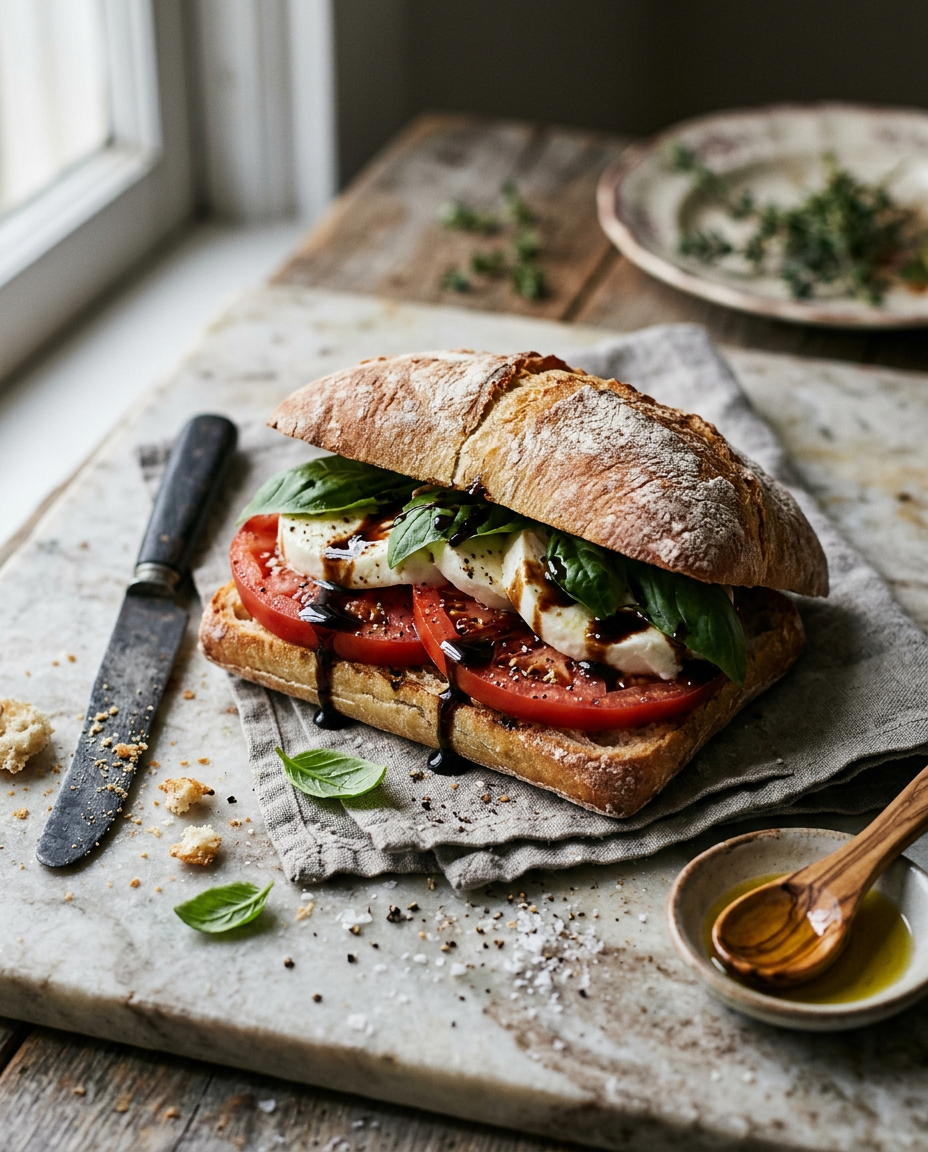
#10's salad logic in travel form: mozzarella, tomato, and basil pressed inside a ciabatta roll until the bread crisps and the cheese just softens. The craft is the press and the moisture order — tomato in a pressed sandwich is a leak waiting to happen, and this build's architecture (cheese buffering, quick press, eat hot) is the answer.
Caprese Ciabatta
Prep: 15 minutes · Cook: 6 minutes · Total: 21 minutes · Makes 2 sandwiches
Ingredients
The build
- 2 ciabatta rolls (about 90 g each), split lengthwise, hinged
- 200 g fresh mozzarella, sliced 5 mm
- 1 large tomato (about 150 g), in 4 thick slices, patted very dry
- 15 g (about 1/2 cup) basil leaves
- 1 tbsp (15 ml) extra-virgin olive oil (about 14 g)
- 1 tbsp (15 g) pesto, optional — the amplified lane
- Flaky salt, black pepper
- Balsamic glaze (about 10 g), optional drizzle
Instructions
- Build in the buffering order. Cut faces: oil on both (or pesto on the bottom); then mozzarella on the bottom face — cheese against bread, the melt's anchor and the tomato's buffer — tomato over the cheese, salt and pepper on the tomato, and the basil laid flat on top, pressed lightly. Checkpoint — from the side: bread, oil, mozzarella, tomato, basil, bread — the tomato touching neither face of bread. Cheese buffers both of the sandwich's wet problems at once; this is the whole architecture.
- Press on a dry pan or panini press, medium heat, 3 minutes per side. A heavy pan weighted on top (or a panini press) compresses the roll and toasts the faces; the cheese should soften and just begin to flow at the edges, not melt into soup. Checkpoint — the bread is gold-pressed with grill or pan marks, the sandwich compressed to two-thirds, and cheese visible at the seams in soft, thick ropes — the 3-minute face at medium (a pan surface near 180 °C) hits exactly this window; longer and the tomato floods.
- Rest 1 minute, cut, finish. Off the heat, the sandwich rests a minute — the cheese sets slightly and the tomato's first juice stays inside — then the diagonal cut and the optional balsamic zigzag over the cut face. Checkpoint — eating test: the pressed ciabatta's crisp-chew, warm mozzarella's milk-pull, tomato's sweet acid held in place by it, basil's perfume, oil's fruit — the salad's whole argument in a hand that travels. If the bottom bread sogs before the sandwich's end, the tomato ran wet or the press ran long; both fixes live above.
- Pat the mozzarella slices on a towel too — fresh mozzarella weeps, and the drier both cheese and tomato start, the longer the pressed sandwich holds.
- Pull the ciabatta's crumb slightly if the roll runs dense: a small channel keeps the press from squeezing the filling out the sides.
Troubleshooting
| Symptom | Cause | Fix |
|---|---|---|
| Bread sogged through | Wet tomato, no cheese buffer, over-pressed | Pat dry; the buffering order; the 3-minute face |
| Cheese vanished into the bread | Overheated, over-pressed | Medium heat; soft-flow, not soup |
| Sandwich burst at the seams | Overfilled or crumb not pulled | 5 mm slices; the small channel |
Storage, Make-Ahead & Variations
- Serves in the minute; holds 15 minutes warm. The components keep a day refrigerated (4 °C) — the assembly is 5 minutes from a stocked fridge. - Variations: the pesto lane; the prosciutto addition for the salty seat; the #80 slow-melt grilled cheese as the format's other clock; #81's unpressed stack for the lunchbox.