Caprese Grilled Cheese
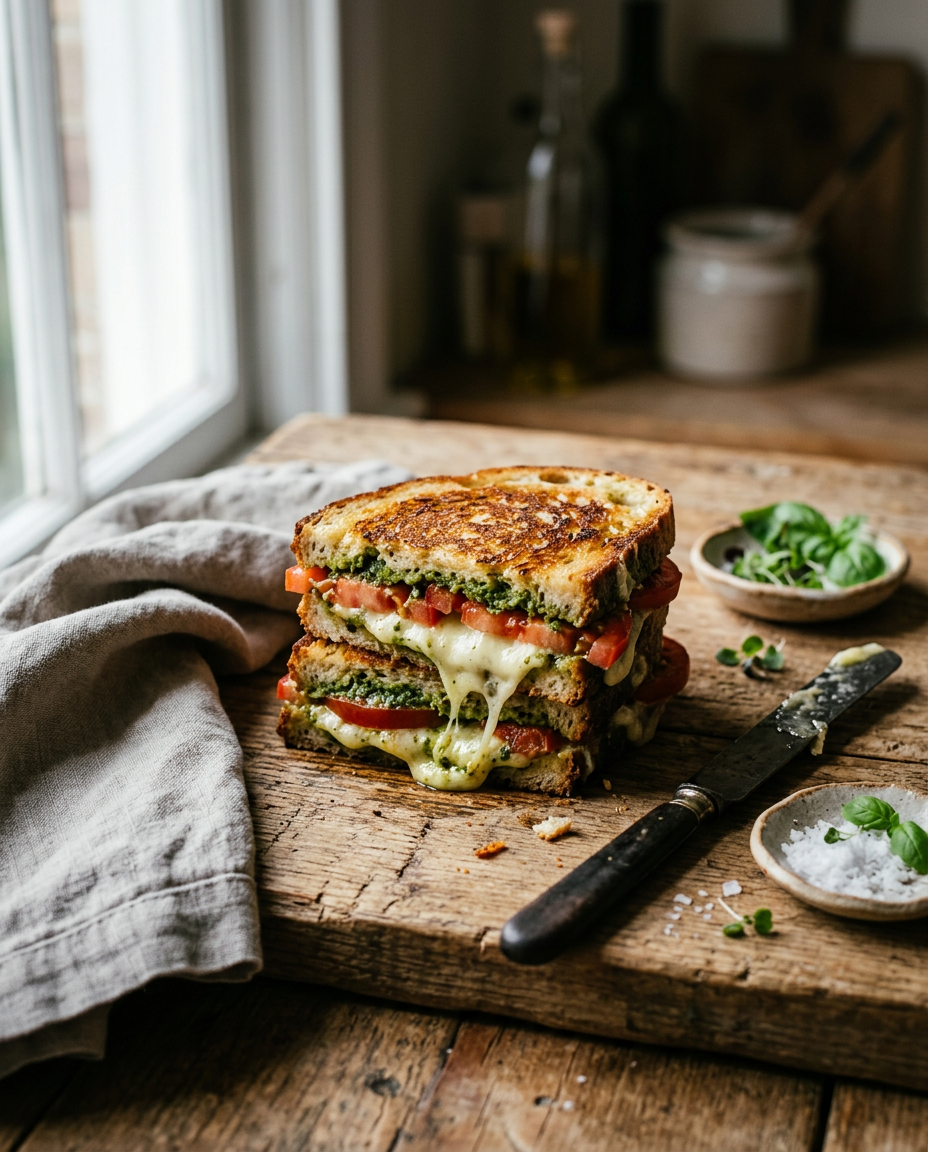
#10's caprese logic at the melt's register: mozzarella, tomato, and basil inside a slow-griddled cheese sandwich — where the challenge is physics, not flavor. Tomato is water and mozzarella is mild, and this build's whole craft is the low-and-slow melt that sets the cheese before the tomato floods, plus the salt that makes the mild pair speak.
Caprese Grilled Cheese
Prep: 10 minutes · Cook: 12 minutes · Total: 22 minutes · Makes 2 sandwiches
Ingredients
The build
- 4 slices sourdough or white bread (about 70 g each), cut 1.5 cm thick
- 200 g low-moisture mozzarella, grated — low-moisture by law; fresh mozzarella is #61's lane
- 1 medium tomato (about 120 g), in 4 thin slices, salted and patted very dry
- 10 g (about 8 leaves) basil
- 2 tbsp (30 g) butter, softened, for the outsides
- Flaky salt, black pepper
- Optional: 1 tbsp (15 g) pesto on the inner faces — the flavor insurance
Instructions
- Build cheese-first, the melt's foundation. Butter the outsides of all slices; pesto (if running) on the insides. Bottom slice: a third of the mozzarella spread to the edges — a cheese floor that melts and fries into the bread's own crust — then the tomato slices in one thin, even layer, peppered, the basil pressed on, and the second third of cheese over the tomato, sealing it under. The last third goes on the top slice's face. Checkpoint — from the side: bread, cheese, tomato-basil, cheese, bread — the tomato sealed in a cheese envelope, touching no bread on either side. This envelope is the whole architecture: the melting cheese welds itself to the bread and holds the tomato's water inside its pocket, where a bare tomato would steam the crumb into paste.
- Griddle low and slow, 5–6 minutes a side. A heavy pan over low — lower than any other grilled cheese on this site, because mozzarella's melt runs slower than cheddar's and the tomato needs the cheese set before its water moves. The first side to deep, even gold; flip once, gently, the same patience again. Checkpoint — the bread's faces deep gold and dry, the sandwich's edges showing the mozzarella's first molten bulge, and — the interior test at the pan — a slight give under the spatula's press, the feel of a set cheese rather than a loose stack. Rush the heat and the bread browns before the mozzarella melts; the low lane is the only lane here.
- Rest 1 minute, halve, and finish the face. Checkpoint — eating test: the buttered sourdough's crunch giving to the mozzarella's long, mild pull — and then the payoff, the tomato's concentrated sweet-acid burst and the basil's perfume arriving through the cheese, salted enough to taste like caprese rather than melted milk. The flaky salt at the finish is not optional: mozzarella and tomato are both mild, and the salt's crack is what makes the sandwich say its own name.
- Salt the tomato slices 10 minutes ahead and pat them dry with a towel — twice, if they run juicy. The caprese melt's single failure is the tomato's water defeating the cheese's melt, and this step is the countermeasure's first half.
- Grate the mozzarella coarse and divide it in thirds: base layer, tomato-covering layer, top layer — the cheese's architecture below.
Troubleshooting
| Symptom | Cause | Fix |
|---|---|---|
| Bread soggy before the cheese melts | Fresh mozzarella, wet tomato, or heat too low | The brick cheese; salt and pat twice; low — but not idle |
| Sandwich slides apart at the flip | Bare tomato touching bread | The cheese envelope, sealed on both sides |
| Tastes mild, anonymous | Salt skipped on mild ingredients | Salt the tomato at the prep; flaky salt at the finish |
Storage, Make-Ahead & Variations
- Serves in the minute; the assembled sandwich holds 10 minutes at the melt's warmth. Components keep days; the build takes 8 minutes from the fridge. - Variations: the pesto lane (above); the balsamic drizzle at the finish; the prosciutto seat for the salty lane; #88's classic three-cheese build as the family's plain master; #102's vegan melt as the family's other physics lesson.