Caprese Salad
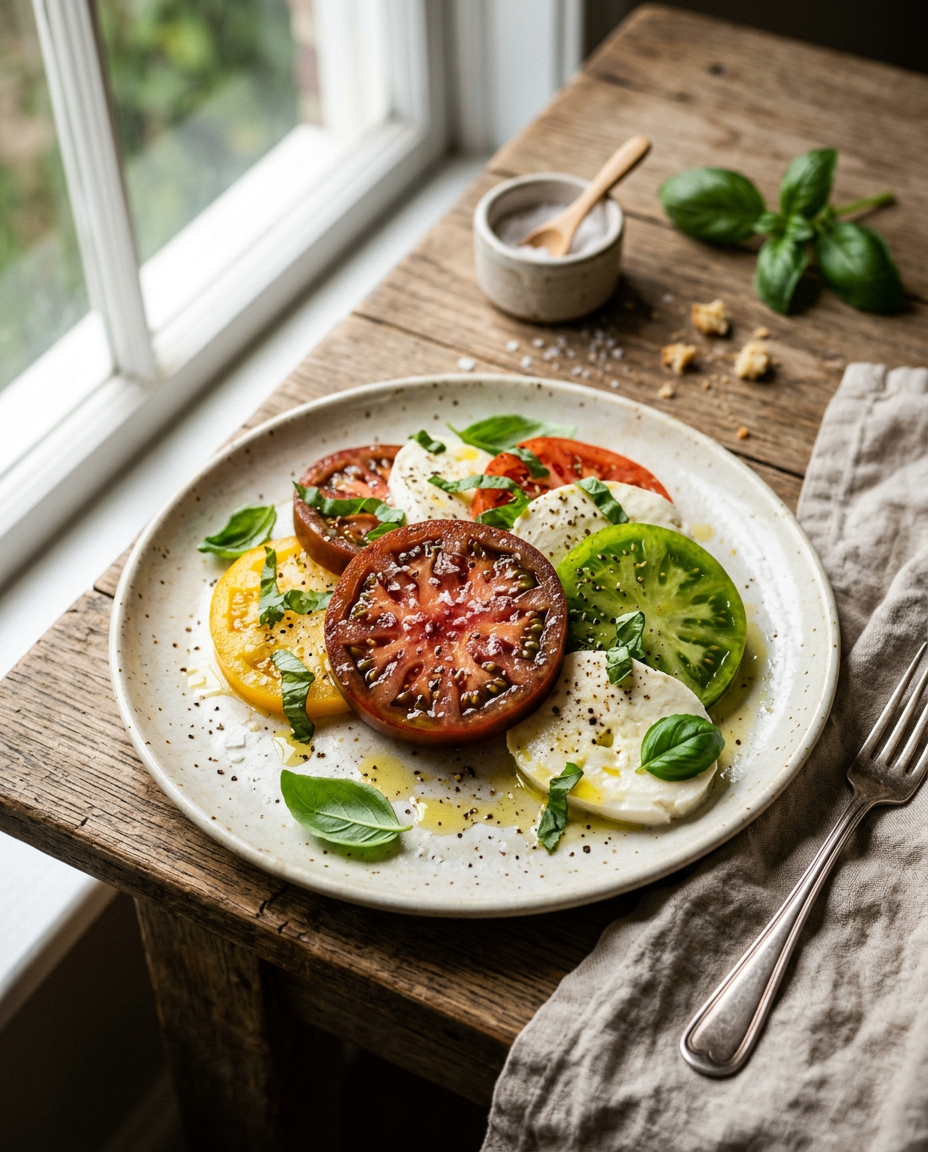
Three ingredients, no heat, no hiding: tomato, mozzarella, basil, oil. The caprese is the strictest test on this site because nothing in it forgives a shortcut — a pale tomato or rubbery cheese reads instantly. This master record carries the sourcing law and the salt timing; #61, #80, and #81 build on it in sandwich form.
Caprese Salad
Prep: 15 minutes · Cook: No cook · Total: 15 minutes · 4 as a side, 2 as a light main
Ingredients
The three, plus oil
- 450 g (about 3 medium) ripe tomatoes — the number-one variable; see below
- 250 g (9 oz) fresh mozzarella, ideally buffalo (mozzarella di bufala), sliced 1 cm thick
- 15 g (about 1 cup) fresh basil leaves
- 45 ml (3 tbsp) extra-virgin olive oil (about 41 g) — the best you own; this dish is the oil's stage
- Flaky salt (about 2 g) and coarsely ground black pepper
- Optional, the Ischiote register: a drizzle of #5's balsamic or 15 ml aged balsamic
Instructions
- Slice and salt the tomatoes, then wait 5 minutes. Lay the tomato slices on paper towels, salt them lightly with flaky salt, and let them stand. The salt seasons the flesh and draws a little of the water that would otherwise dilute your olive oil on the plate. Checkpoint — small beads of moisture on the tomato surfaces after 5 minutes — that is the salt working. Blot gently with a fresh towel before building.
- Build the alternating stack or fan. On a room-temperature platter, lay tomato and mozzarella in alternating slices — the classic tight fan or a loose scatter both work, but keep the pattern honest: tomato, cheese, tomato, cheese, with a basil leaf tucked or draped over each pair. Checkpoint — every slice shows its cut face up and the red-white-green rotation reads from any angle. This is a dish you plate once and serve immediately.
- Oil, pepper, and the last salt. Drizzle the olive oil over everything in a thin spiral, grind pepper across, and finish with a few more flakes of flaky salt on the cheese only — the cheese needs its own salt; mozzarella is mild by design. Checkpoint — eating test: the tomato's sweet acid, the cheese's cool milk fat, the basil's anise lift, and the oil's grassy pepper at the finish — four flavors in one bite, none negotiable. If it tastes flat, the tomato failed, not the recipe; the roasted-tomato rescue is the honest fix.
- The tomato law: buy tomatoes that smell like tomato at the stem scar and give just barely to a press. If only mealy off-season tomatoes exist, roast them — 200 °C for 25 minutes with oil and salt concentrates what the sun never delivered — and serve them warm over the cheese in the winter register.
- The mozzarella law: buy it in liquid, the day you serve it. Pre-shredded or dry-wrapped mozzarella has lost the milk that makes the dish. Pull it from the fridge 30 minutes ahead — cold mozzarella is rubber and tastes of nothing.
- Slice tomatoes and cheese to matching 1 cm — equal thickness is the bite's architecture.
Troubleshooting
| Symptom | Cause | Fix |
|---|---|---|
| Watery plate | Unsalted tomatoes or wet mozzarella | The 5-minute salt and blot; drain mozzarella slices on towels |
| Cheese rubbery | Served cold or low-moisture mozzarella | 30 minutes at room temperature; buy in liquid |
| Bland despite good parts | Under-salting the cheese, timid oil | Salt the cheese directly; the oil should be visible on the plate |
Storage, Make-Ahead & Variations
- The caprese does not keep — assembled, it weeps within 30 minutes. Slice components no more than 1 hour ahead and hold separately at room temperature, never refrigerated. - Variations: the winter roast (above); pesto swooshed under the fan; peaches standing in for tomato in August (the file's favorite heresy); the stacked-and-skewered party format that carries this flavor set to a tray.