Caprese Sandwich — The Unpressed Classic
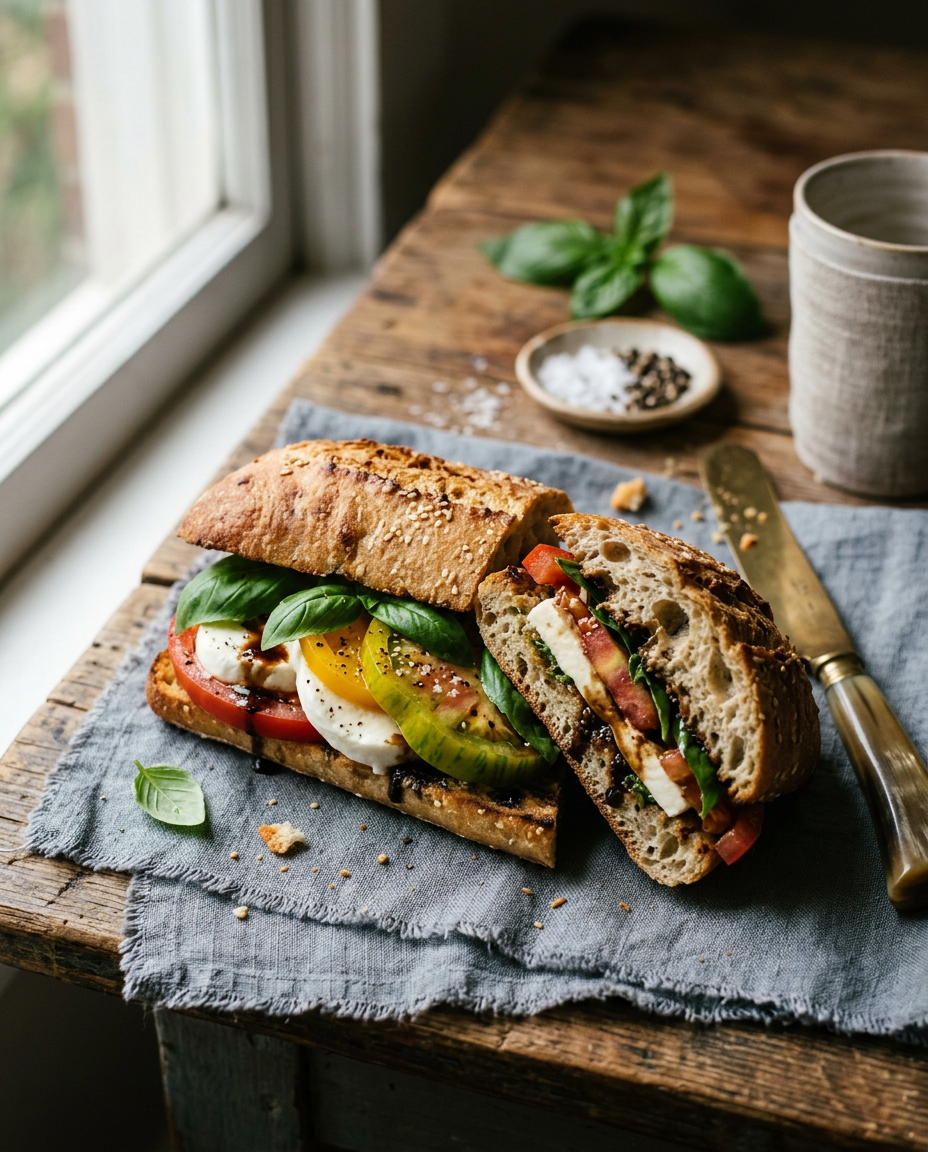
The third caprese format and the quietest: no press, no melt, no heat — just the season's best tomato, fresh mozzarella, basil, and oil on bread, stacked and eaten in the hour the ingredients are at their peak. The craft is knowing when this version is the right one: the answer is August, with a tomato worth honoring and mozzarella in its liquid.
Caprese Sandwich — The Unpressed Classic
Prep: 10 minutes · Cook: No cook · Total: 10 minutes · Makes 2 sandwiches
Ingredients
The build
- 4 slices country bread, ciabatta, or a split baguette (about 240 g) — a bread with structure, lightly toasted or not at all
- 200 g fresh mozzarella in liquid, drained and sliced 5 mm
- 1 large ripe tomato (about 180 g), sliced 5 mm, salted and blotted
- 15 g (about 10 leaves) basil
- 2 tbsp (30 ml) extra-virgin olive oil (about 27 g)
- Flaky salt, black pepper
- Optional: 1 tbsp (10 g) pesto as the spread; a drizzle of balsamic
Instructions
- Bread, oil, and the layers in the soft order. Light toast if the bread runs delicate (structure, not crunch); oil on both faces. Bottom slice: mozzarella slices (blotted — fresh mozzarella weeps, and the blot is the unpressed build's one moisture discipline), basil over, tomato over the basil, pepper, and the crown. Checkpoint — from the side: bread, oil, mozzarella, basil, tomato, bread — the tomato at the top, farthest from the bottom bread's long exposure, its wet weight held above the mozzarella's density and the basil's buffer.
- Salt at the top, eat in the first hour. Flaky salt over the tomato's face before the crown closes (salt draws — at the top, its draw meets air, not bread); the sandwich pressed once gently and eaten within the hour — the unpressed caprese's whole clock. Checkpoint — eating test: cool and clean — the tomato's acid-sweet at full voice, the mozzarella's cool milk, basil's perfume, oil's pepper — every ingredient at the freshness the format chose it for, none transformed, nothing hidden. It should taste like the salad's own season between two pieces of bread; if it tastes like it needs heat, the tomato was not ready and #80's melt was the right call.
- The when-and-why law, this format's whole identity: heat (the press of #61, the melt of #80) transforms good mozzarella into stretch and tomato into jam — and in doing so it forgives mediocre ingredients. The unpressed version forgives nothing: it exists for the week a truly ripe tomato meets mozzarella worth its brine. Off-season, choose the pressed or melted format and let this one wait.
- Salt the tomato slices 5 minutes and blot — the unpressed sandwich has no melted-cheese barrier, and the bread's defense is only this blot and its own toast.
Troubleshooting
| Symptom | Cause | Fix |
|---|---|---|
| Bread soggy before the sandwich's end | Unblotted mozzarella or tomato | Both blots — this build has only its discipline |
| Sandwich tastes like it wants heat | Underripe tomato | It does — run #80's melt format instead |
| Layers slide at the bite | Sliced thick, stacked loose | 5 mm slices, one gentle press |
Storage, Make-Ahead & Variations
- A minute-zero format with an hour's clock — no storage exists. The components keep a day; the judgment about which caprese format to build is the recipe's real skill. - Variations: the pesto spread; the prosciutto seat; the grilled-vegetable extension (zucchini at its peak); the baguette's split-single format for the lunchbox — and #61/#80 as the family's other clocks.