Chopped Cheese
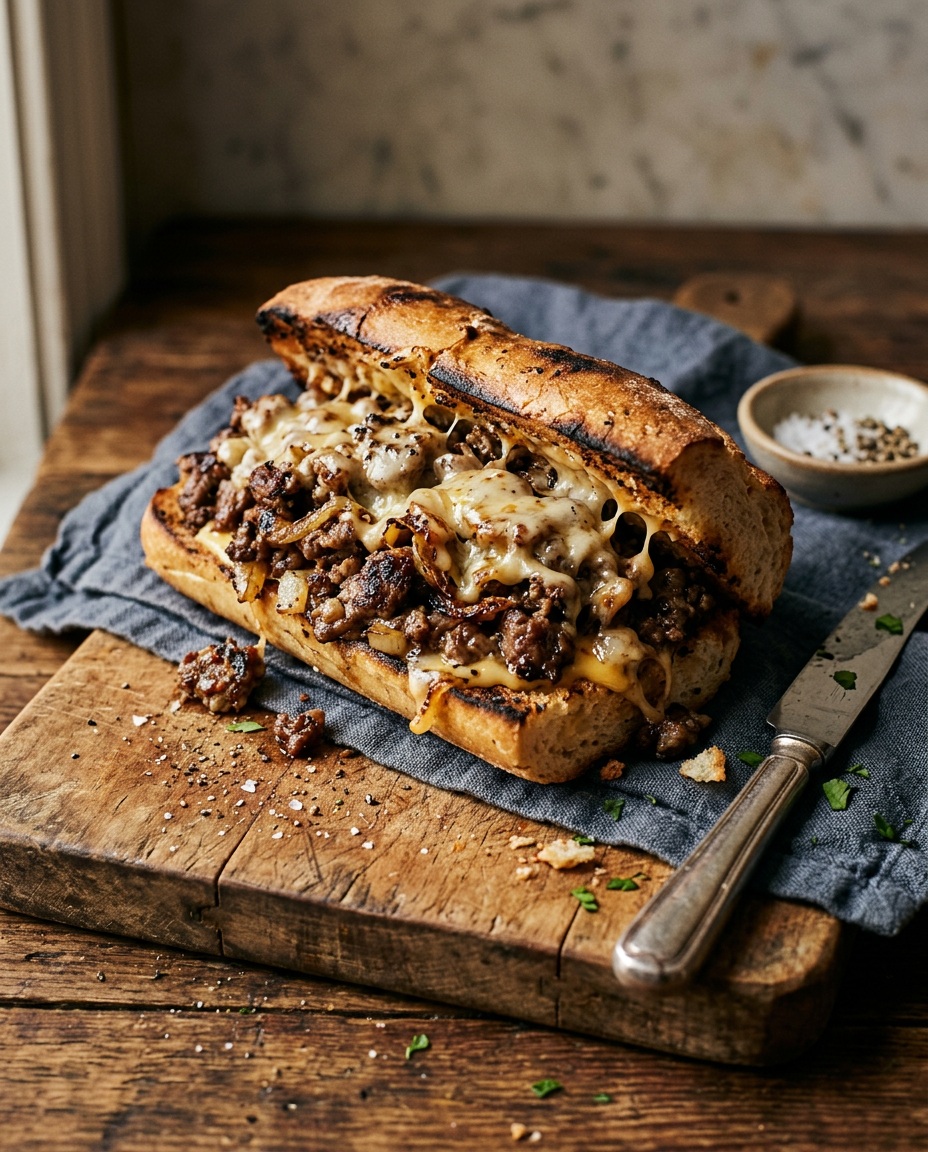
The bodega classic: seasoned beef and onions chopped on the griddle with two spatulas until the edges crisp, American cheese melted through the chop, and the whole steaming mass scooped into a soft hero roll with lettuce, tomato, and mayo. Harlem and the Bronx made it; the five boroughs argue about it; the technique is the chop itself — the griddle work that turns a burger and a cheesesteak into one sandwich.
| Active time | 25 minutes |
| Hands-off time | 0 |
| Difficulty | Moderate — the two-spatula chop is the craft |
| Key techniques | the griddle chop, cheese-into-the-meat, the steam-toasted roll |
| Make-ahead | components 2 days; assembled, 5 minutes |
Chopped Cheese
Prep: 15 minutes · Cook: 15 minutes · Total: 30 minutes · Makes 4 sandwiches
Ingredients
The chop
- 700 g (1.5 lb) ground beef, 80% lean — the fat is the flavor's carrier here
- 1 large onion (about 250 g), diced medium
- 1 tsp (3 g) sweet paprika
- 1 tsp (3 g) garlic powder
- 1/2 tsp (1.5 g) cayenne, optional — the spiced register
- 1 tsp (5 g) salt, plus more to taste
- Black pepper
- 2 tbsp (25 ml) neutral oil, if the pan runs lean
The cheese
- 8 slices American cheese (about 140 g) — the melt is the point; see the note
The roll and the salad
- 4 soft hero or sub rolls (about 90 g each), split lengthwise, hinged
- 3 tbsp (45 ml) mayonnaise
- 150 g (about 3 cups) shredded iceberg lettuce
- 1 large tomato (about 150 g), sliced thin, patted dry
- 1/2 small onion (about 60 g), sliced thin — the raw crunch, optional
- Ketchup and hot sauce, the table's own dials
Instructions
- Sear the beef in slabs, then start the chop. Heat the pan over medium-high; divide the beef into 4 rough patties and lay them 2 minutes undisturbed to build a browned face, then begin: chop each patty with the spatula's edge, working it into a coarse crumble, and let the crumble sit 1 minute more to brown again before the next chop. Add the diced onion halfway through and chop it into the meat. Checkpoint — the crumble shows browned edges and still-juicy interiors, the onion translucent and caught through the beef — not a gray mass. The chop-and-brown cycle (chop, wait, chop) is the whole technique: chopping continuously steams the meat gray, and the waiting between chops is where the crust builds.
- Season and crisp the edges. Sprinkle the paprika, garlic powder, cayenne, salt, and pepper over the chop; turn and press it flat across the pan's full surface and let it sit 90 seconds — the pressed layer's underside crisps — then chop and turn once more. Checkpoint — the chop's texture runs craggy with crisp edges, the smell full of paprika and browned onion; a test bite is savory, seasoned through, with crackle in it. The crisp-edge press is the chopped cheese's difference from ordinary crumbled beef.
- Cheese into the meat, not under it. Lay the American slices directly over the hot chop, off the heat, and let them soften 30 seconds; then fold and chop the melting cheese through the beef until every crumb is slicked. Splash 1 tbsp of water beside the mass and cover 20 seconds if the cheese needs the steam's help. Checkpoint — the chop is glossy and pulls in strings when lifted — cheese in the meat, not a cheese layer on top. This integration is the sandwich's name's own technique: chopped cheese, not cheese-topped chop.
- Steam-toast the rolls. While the cheese folds, lay the split rolls cut-side down on the pan's edge (or a dry skillet's) for 30–45 seconds to warm and faintly toast; the bodega version runs the roll through the meat's pan drippings, and the file endorses it. Checkpoint — the roll's face is warm, faintly stained with the pan's seasoning, and still soft — a crisp roll fights the soft chop and loses the sandwich's whole texture logic.
- Build in the bodega's order. Mayo on both faces; lettuce on the bottom (the moisture fence under the tomato), tomato over, then the hot chop scooped over the lettuce — the salad under the meat, steaming it slightly, the bodega's own architecture — raw onion if running, ketchup and hot sauce zigzagged, crown pressed on gently. Checkpoint — eating test: the roll's softness giving to the chop's molten, crisp-edged richness, then the lettuce's cold crunch and tomato's acid arriving under it — hot-over-cold in one bite, the sandwich's signature contrast. It should need both hands and deserve them.
- Two spatulas, or one sturdy spatula and a wooden spoon's edge — the chop needs two working edges. A cast-iron pan or griddle held over two burners gives the surface the format deserves.
- Everything else builds fast once the chop starts: mayo the rolls, prep the lettuce and tomato before the heat goes on. This sandwich eats in the ten minutes after the beef hits the pan, and there is no pausing the chop.
Doneness & Quality Checkpoints
- The chop-and-brown cycle — crumble with browned edges, never steamed gray
- The pressed layer with 90 seconds of crisp before the final chop
- Cheese folded into the meat, strings through the crumb
- Rolls steam-toasted through the pan's drippings, still soft
- Hot chop over cold salad — the temperature architecture
Finish & Plate
Wrapped halfway in deli paper — the wrap's grip is the sandwich's second spatula — with the diagonal cut optional and the hot sauce bottle on the table. It stands alone at lunch and answers to nothing.
Troubleshooting
| Symptom | Cause | Fix |
|---|---|---|
| Beef gray, steamed | Continuous chopping | Chop, wait for the brown, chop again |
| Cheese greasy, clumped | Wrong cheese or high heat | American, folded off the heat; the splash-and-cover trick |
| Roll disintegrated | Hard roll or over-toasted | The soft hero, the 30-second warm-through |
Storage, Make-Ahead & Variations
- The chop keeps 2 days refrigerated (4 °C) and re-crisps in a hot pan in 3 minutes — the make-ahead's honest format. The assembled sandwich holds 5 minutes; the roll's softness and the salad's cold are the clocks. - Variations: the spiced register with harissa or the #101 filfel; the bacon-blended chop; the chicken chopped cheese running the same technique on thighs; the breakfast build with eggs chopped in — the technique accepts nearly any protein that will brown.