Greek Salad (Horiatiki)
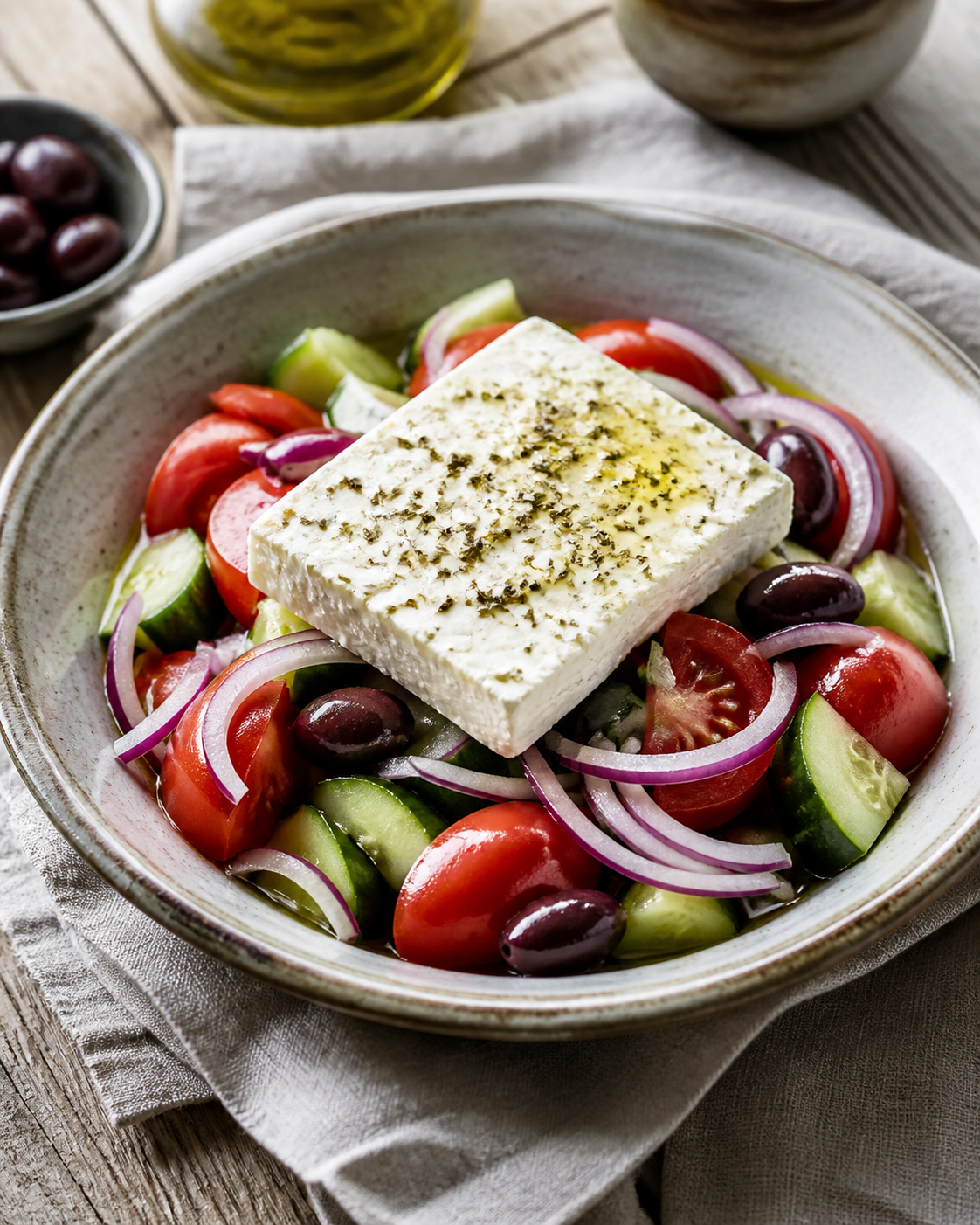
The village salad of Greece — horiatiki — and its law is what it refuses: no lettuce, no whisked dressing, no small cuts. Tomatoes, cucumber, pepper, onion, olives, and a slab of feta sit under a straight pour of olive oil and oregano, dressed in the bowl by the vegetables' own juices. The dressing at the bottom — the "soup" — is the reward, sopped with bread after the salad is gone.
Greek Salad (Horiatiki)
Prep: 15 minutes · Cook: No cook · Total: 15 minutes · 4 as a main, 6 as a side
Ingredients
The vegetables
- 600 g (about 4 large) ripe tomatoes, cut in wedges
- 300 g (1 large) English cucumber, in thick half-moons — peeled or unpeeled as you prefer
- 1 green bell pepper (about 150 g), cut in rings
- 1 red onion (about 120 g), sliced thin
- 100 g (about 2/3 cup) kalamata olives, unpitted for honesty, pitted for company
The cheese and the rain
- 200 g (1 thick slab) feta in brine — one slab laid on top, not crumbled
- 90 ml (6 tbsp) extra-virgin olive oil (about 82 g) — Greek if you can; this is the dish that shows it
- 1 tbsp (15 ml) red wine vinegar — optional; many islands skip it
- 1 tsp (1 g) dried Greek oregano, plus more at the table
- Flaky salt (about 2 g) — lightly; the feta and olives carry salt
- Black pepper
Instructions
- Build in the bowl, in order. Tomatoes first (they make the juice), cucumber and pepper next, onion rings and olives over, and the feta slab set on top like a raft. The layering is not looks — the fragile cheese rides above the heavy vegetables, and the dressing poured from above runs down through everything. Checkpoint — the bowl looks underdressed and overbuilt. Correct: the next two steps finish it at the table.
- The straight pour. Drizzle the olive oil over everything, splash the vinegar if using, scatter the oregano and a pinch of flaky salt, and grind the pepper. Do not toss. Horiatiki is served with its layers readable and mixed lightly by the server or by each forkful — the vegetables marinate in place. Checkpoint — the oil pools faintly gold at the bowl's base and the oregano dots the feta's white. Tossed into pink homogeneity, it becomes a different (lesser) salad.
- Rest 5 minutes, then serve with bread. The salt and oil work for five minutes, drawing tomato juice into a dressing at the bottom — the salad's engine. Bring the bowl, a fork and spoon for serving, more oregano and oil for the table, and bread for the finish. Checkpoint — eating test: each forkful is different — a sweet tomato wedge under oil, a salty olive, cool cucumber, onion's bite, then feta broken from the slab with the fork. And the endgame: bread dragged through the pink-gold liquid at the bottom. If you skip the bread, you have eaten half the salad.
- Cut everything one size larger than feels right: tomato wedges from eighths, cucumber coins thicker than a coin. The village salad's texture is chunky, and small cuts weep faster and eat sadder.
- Use tomatoes that smell like the garden and give slightly — this recipe has no heat and nowhere to hide.
- Pull the feta and vegetables cool but not refrigerator-cold: 4 °C tomatoes lose their perfume; 20 minutes on the counter restores most of it.
Troubleshooting
| Symptom | Cause | Fix |
|---|---|---|
| Bowl dry at the bottom | Underripe tomatoes or skimpy oil | Ripe tomatoes; the oil pour should look generous |
| Onion bites too sharp | Thick slices of hot onion | Slice thin; 10 minutes' ice-water soak tames it |
| Tastes salty enough but flat | Missing oregano's aroma | Rub the oregano between your fingers over the bowl |
Storage, Make-Ahead & Variations
- Does not keep assembled — the vegetables weep and the feta weathers within an hour. The salad is 15 minutes, and that is its integrity. Bread is not optional equipment. - Variations: capers scattered in (island style); Cretan barley rusk under the tomatoes for the dakos register; a few anchovy fillets laid on the feta for the full Cyclades build; peppers roasted instead of raw in the winter months.