Grilled Cheese — The Classic
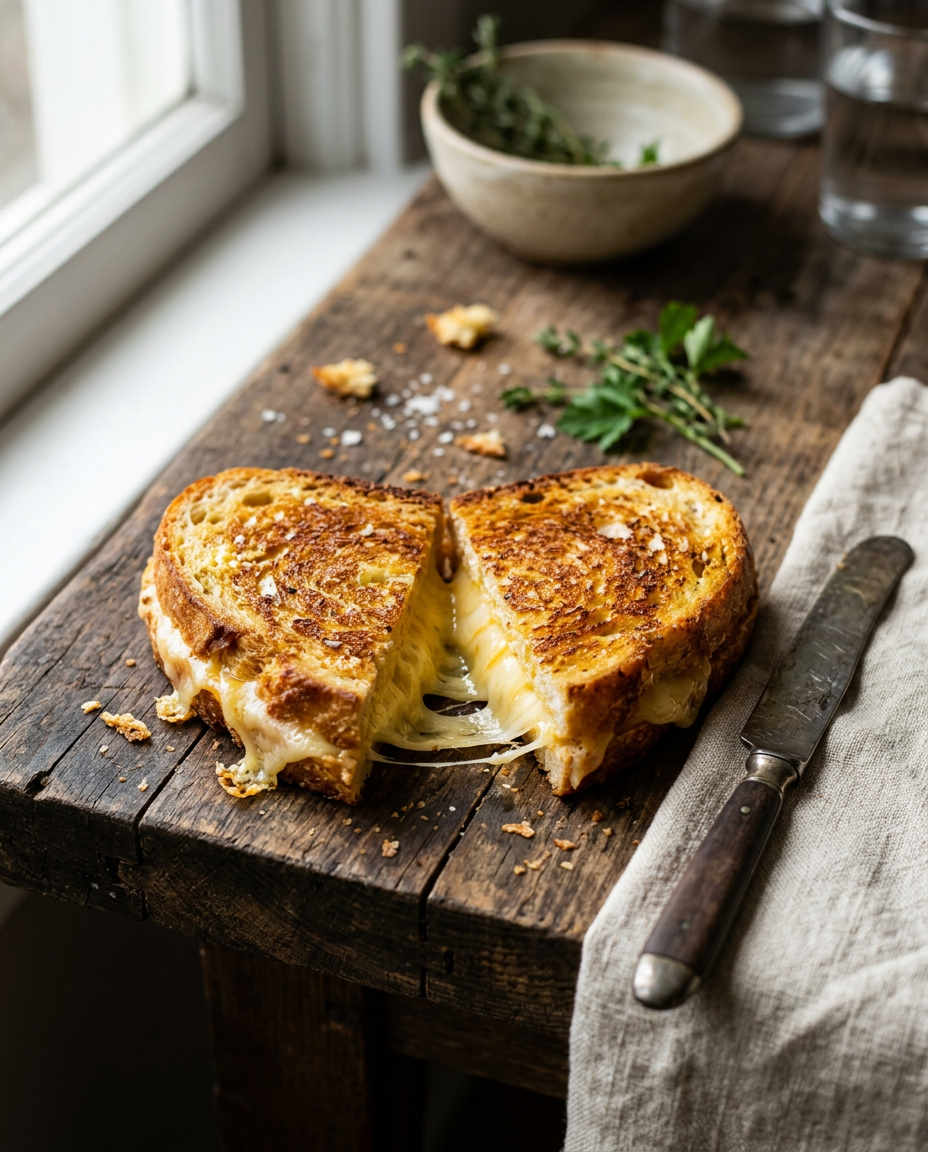
The master build the family cites: three cheeses for depth (one to melt, one to stretch, one to flavor), low and slow on the griddle, and the mayonnaise-outside trick that toasts more evenly than butter ever did. #80's caprese melt and #102's vegan build both descend from this file's law: patience, not heat, is what melts cheese.
Grilled Cheese — The Classic
Prep: 5 minutes · Cook: 12 minutes · Total: 17 minutes · Makes 2 sandwiches
Ingredients
The three cheeses
- 100 g sharp cheddar, grated — the flavor
- 60 g low-moisture mozzarella, grated — the stretch
- 40 g (about 1/3 cup) parmesan or gruyère, grated — the depth's finish
The bread and the outside
- 4 slices sturdy white bread, Pullman or sourdough, 1.5 cm (about 300 g)
- 2 tbsp (30 g) mayonnaise — the outside's spread, see the law
- Optional: 1 tbsp (14 g) butter, for the pan's film and the flavor's finish
Instructions
- Mayonnaise the outsides — the evenness law. A thin, even coat of mayo on all four outsides; the inside faces stay bare for the cheese. Mayonnaise's higher smoke point and its fine, even spread toast the bread to uniform gold where butter browns in blotches and burns at its milk solids. Checkpoint — every outer face carries an opaque, even film; the bread's crust line visible through it. The flavor difference is honest (butter tastes richer; mayo tastes neutral-toastier) — the pan's optional butter film returns the richness at the toast.
- Fill generously — the full melt's measure. About 100 g of the blended cheeses per sandwich, spread to the bread's edges and piled slightly higher at the center (the melt will level it). Checkpoint — the blend's three cheeses visibly mixed — orange cheddar, white mozzarella, the parmesan's sand — with no bare bread at any margin. The timid fill is the home version's classic shortfall; the deli's advantage is grams, not secrets.
- Griddle low and slow, 5–6 minutes per side. A heavy pan over medium-low (about 150 °C at the surface — the mayo's film sizzles very softly); the sandwich in, pressed gently once, and left alone 5–6 minutes to the first side's deep, even gold. Flip once; the same patience again, until the cheese's first strings run at the pressed edges. Checkpoint — the bread's faces run deep even gold — no dark blotches — and the sandwich's edges show molten cheese beginning to bulge and stretch. The interior test at the flip: lift the crown's corner — the cheese inside should already be fully melted and moving, not a stack of shreds. If the face browns before the heart melts, the heat ran one notch high; lower it and the second side carries the correction.
- Rest 1 minute, halve on the diagonal, and pull. Checkpoint — eating test: the bread's crisp-gold shell giving to the center's molten flow — cheddar's sharp, mozzarella's long stretch, the parmesan's finish — one integrated cheese flavor with three textures in the pull. It should need the plate's support at the bite and taste like the whole genre's argument won; the tomato soup's dip is the canonical partnership, and the file has no notes.
- Grate your own cheese, always: pre-grated cheese carries cellulose (an anti-caking coat that fights the melt) and grates-up-the-block runs 30 seconds with a box grater. The three-cheese blend wants a coarse grate — the shreds melt from their edges at even rates.
- The low-and-slow doctrine set before the pan heats: this sandwich's budget is 10–12 minutes, and every shortcut (high heat's fast toast) makes an unmelted-hearted sandwich with a burnt face.
Troubleshooting
| Symptom | Cause | Fix |
|---|---|---|
| Bread golden, cheese unmelted | Heat too high | Medium-low; the 10–12-minute budget |
| Bread burnt in blotches | Butter's milk solids | The mayo film — or clarified butter's lane |
| Cheese ran out into the pan | Overfilled past the margins | The edges' 5 mm kept bare |
Storage, Make-Ahead & Variations
- Serves in the minute; a grilled cheese does not store and the file declines to pretend. The grated blend keeps 3 days refrigerated (4 °C) in a jar — the 6-minute build any day. - Variations: #80's caprese melt; the tomato-and-bacon insert; the gruyère-and-caramelized-onion build; #102's vegan physics lesson; the pickle-side-and-Dijon-inside deli lane.