Ham and Cheese Sliders
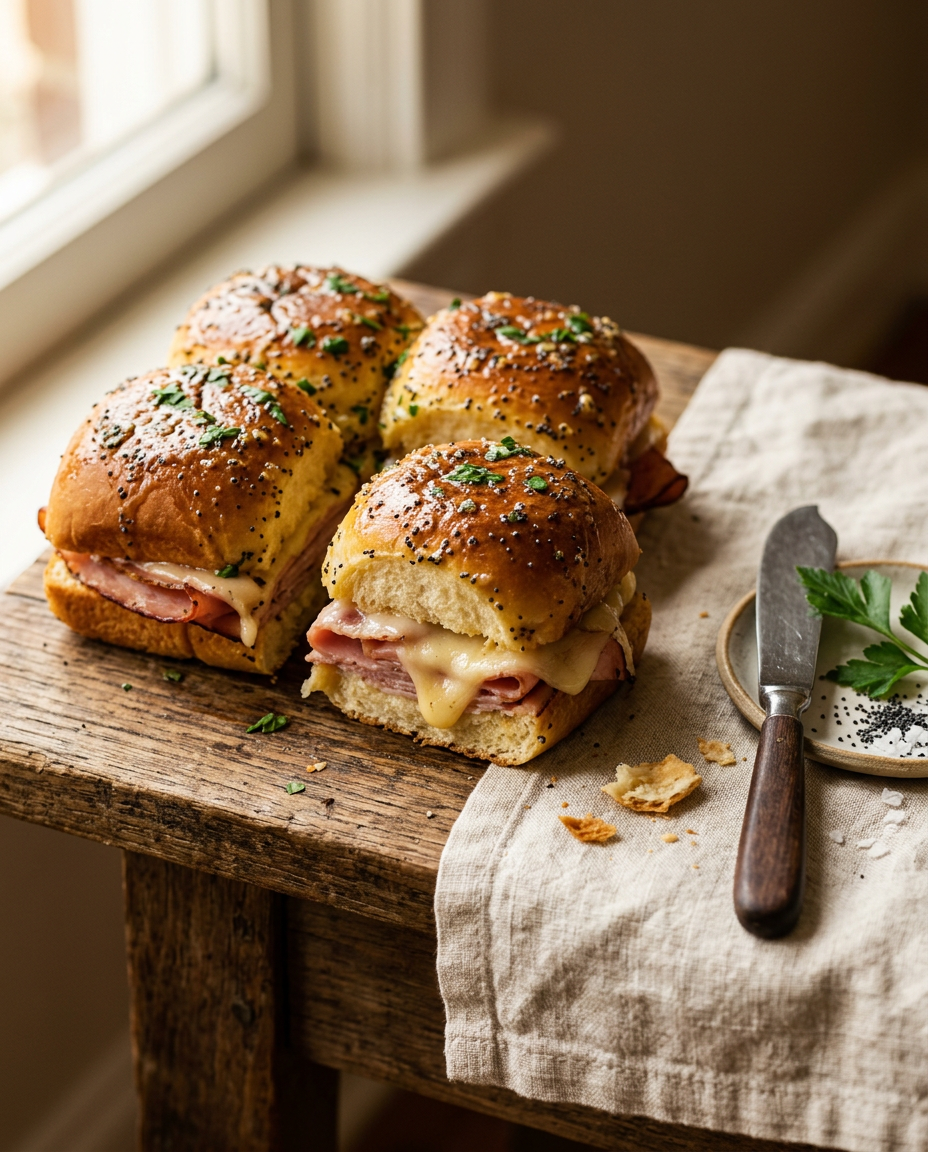
| Active time | 15 minutes |
| Hands-off time | 20 minutes (bake) |
| Difficulty | Easy |
| Key techniques | the uncut-tray bake, the poured sauce, the pull line |
| Make-ahead | assembled overnight; baked, 20 minutes at best |
Ham and Cheese Sliders
Prep: 15 minutes · Cook: 20 minutes · Total: 35 minutes · Makes 12 sliders
Ingredients
The tray
- 12-pack sweet dinner rolls (Hawaiian or potato rolls, about 340 g), unseparated
- 250 g (about 8–9 slices) good deli ham, shaved or thin
- 200 g (about 8 slices) Swiss or provolone, or half Swiss, half cheddar
- 1 tbsp (2 g) poppy seeds, for the top
The poured sauce
- 90 g (6 tbsp) butter, melted (about 82 g after)
- 1 tbsp (10 g) Dijon mustard
- 1 tbsp (15 g) brown sugar
- 1 tbsp (4 g) finely minced onion, or 1/2 tsp onion powder
- 1/2 tsp (1 g) Worcestershire sauce
- 1/4 tsp (1 g) salt
Instructions
- Build the block. Bottom half of the rolls in the baking dish (a 23 × 33 cm or close), ham in an even blanket, cheese over, and the roll-lid set back on. No butter on the bread yet — the sauce is the butter. Checkpoint — the ham and cheese run edge to edge with no bare roll; overhang gets trimmed or tucked — filling that hangs outside the bread burns first and releases first.
- Whisk and pour the sauce. Butter, Dijon, brown sugar, onion, Worcestershire, and salt, whisked 20 seconds; pour slowly over the lid, letting it run down the sides — a spoon guides it along the edges so the side rolls drink as the top ones do. Scatter the poppy seeds over. Checkpoint — the lid glistens everywhere and the dish's corners hold a shallow pool; the sauce smells like a deli's warm hour. The pour is generous by design — the rolls are about to absorb it as they bake.
- Bake covered, then open — the two-stage law. Cover tightly with foil and bake at 175 °C (350 °F) for 12 minutes; uncover and bake 5–6 minutes more, until the lid is glossy-touched with gold and the cheese has visibly melted at the cut edges. Checkpoint — the covered stage steams the tray through and sets the sauce's soak; the uncovered stage toasts the lid and finishes the cheese's melt. Pull when the sides bubble and the lid's tops shine — the sweet rolls go from golden to dark quickly at the end, and the last two minutes are watched.
- Rest 5 minutes, then cut along the roll lines. The rest lets the cheese set enough to stretch instead of slide. Cut with a serrated knife straight down along the rolls' own seams — never saw, which drags the filling — and lift the first slider to check the underside. Checkpoint — eating test: the roll's sweet softness against the ham's salt, the cheese's pull, and the sauce's mustard-butter hum through every layer — the bottom roll soaked but intact, the lid glossed and poppy-seeded. The tray's whole point is the pull-apart moment; the file's version makes it to the table with the seams still visible and the first two sliders gone before the platter lands.
Doneness & Quality Checkpoints
- Rolls sliced as one lid, never separated before baking
- Sauce poured to gloss and pool, poppy seeds scattered
- Covered 12, uncovered 5–6 at 175 °C — the two-stage law
- 5 minutes' rest before cutting along the seams
- First lift checked: bottom soaked, not sodden
Finish & Plate
Serve on the tray itself, cut but not separated — the pull-apart moment is the presentation. A board under the hot dish, a bowl of pickles beside, and the party's first fifteen minutes handled. The tray pairs with everything from soup to a game on television, which is its natural habitat.
Troubleshooting
| Symptom | Cause | Fix |
|---|---|---|
| Bottoms soggy, collapsed | Too much sauce or under-baked | Pour guided, not dumped; the full uncovered stage |
| Lid pale, cheese unmelted | Foil off too soon | The covered 12 minutes first, always |
| Sliders dry next day | Baked-ahead storage | Overnight the assembly, not the bake — the note's law |
Storage, Make-Ahead & Variations
- Assembled tray keeps overnight refrigerated (4 °C), baked tray is best within 20 minutes and honestly edible the same day reheated (150 °C, foil, 8 minutes). The sauce keeps 3 days in a jar — melt and pour at assembly. - Variations: the #53 funeral sandwich's turkey-and-Swiss build under this same sauce; the roast beef and horseradish lane; the pizza slider (sauce of butter-garlic-oregano, mozzarella and pepperoni); the everything-bagel-seed topping for the sesame-poppy blend.