Panzanella
| Active time | 25 minutes |
| Hands-off time | 30 minutes (rest) |
| Difficulty | Easy — the bread-water balance is the craft |
| Key techniques | the salted-tomato water, the squeeze-soak, the reverse crunch |
| Make-ahead | 2 hours dressed; peak at 30–60 minutes |
Panzanella
Prep: 25 minutes · Cook: 15 minutes · Total: 40 minutes (plus 30 minutes' rest) · 4 as a main, 6 as a side
Ingredients
The bread
- 400 g (about 8 thick slices) day-old country bread or ciabatta, torn into 4 cm chunks — properly stale; fresh bread dissolves into paste
- 60 ml (4 tbsp) extra-virgin olive oil (about 55 g), for the toss
The tomatoes
- 800 g (about 6 medium) dead-ripe tomatoes, cored and cut in chunks, any ugly ones included — this is their dish
- 1 tsp (5 g) fine salt, for drawing the tomato water
The company
- 1 English cucumber (about 300 g), in thick half-moons
- 1 red onion (about 120 g), sliced thin, soaked 10 minutes in ice water
- 15 g (about 1 cup) basil leaves, torn
- 2 tbsp (8 g) capers, rinsed — the Tuscan punctuation
- 30 ml (2 tbsp) red wine vinegar
- 45 ml (3 tbsp) more extra-virgin olive oil (about 41 g)
- Black pepper
The reverse crunch
- 80 g (about 2 slices' worth) of the bread, withheld from the soak and toasted instead
Instructions
- Salt the tomatoes and catch their water. Toss the tomato chunks with the salt in a colander set over a bowl, 20 minutes. The salt pulls the tomatoes' juice — sweet, faintly saline, red-gold — and the tomatoes concentrate slightly while the bowl gathers the dressing's base. Checkpoint — 100–150 ml of tomato water in the bowl, and the tomato chunks have gone glossy and slightly softened. Pour that water off into your measuring cup; it is the recipe's liquid gold.
- Soak the stale bread and squeeze it — the divide. Take about two-thirds of the bread chunks and dip them briefly in cold water (2–3 seconds a chunk, or a quick shower in a colander), then squeeze each one gently in your fist like a sponge: it should come out wet but not dripping, compressed, ready to drink the dressing instead of plain water. Return them to the bowl, broken into rough bite pieces. Checkpoint — a squeezed chunk is pliable, wrung like a damp cloth, and springs back slowly. Bread that was merely dunked and not squeezed will water the salad down; bread squeezed hard is the traditional texture — chewy, dense, glossy when dressed. This squeeze is panzanella's oldest move and its most skipped.
- Build the dressing in the tomato water. Whisk the vinegar, the additional olive oil, and a grind of pepper into the reserved tomato water — an emulsion built on tomato juice, which is why it will taste deeper than any vinaigrette you make from scratch. Add the squeezed bread, the drained tomatoes, the cucumber, the drained-and-patted onion, and the capers, and toss with your hands, gently, for 30 seconds. Checkpoint — the soaked bread is turning rose-gold as it drinks; the bowl's bottom carries only a spoon or two of dressing. More liquid than that means the squeeze was skipped — see step 2, and press on anyway with slightly less glory.
- Toast the withheld bread — the reverse crunch. While the salad rests, toast the remaining third of the chunks dry in a pan or a 200 °C oven for 8–10 minutes to golden, and cool. Checkpoint — these chunks crack when pressed — the salad's final texture, added at service so the last bites have what the first had.
- Rest 30 minutes, finish with basil and crunch, serve. The rest is the marriage: the bread finishes drinking, the onion sweetens into the tomato, the whole bowl settles. Fold the basil through at the end, crown with the toasted chunks, grind pepper over, and bring to the table with the oil bottle. Checkpoint — eating test: the squeezed bread is chewy-glossy and tastes wholly of tomato — the sponge's payoff — with cucumber's cool, onion's bite, caper's salt, and the toasted chunk's crackle against it. The salad should taste like August in a bowl, which is the only honest description this file knows for it.
Doneness & Quality Checkpoints
- Real day-old bread, torn — never fresh, never knife-cut cubes
- Tomato water caught and used as the dressing's base — 100–150 ml
- The squeeze: soaked bread wrung like a sponge
- One-third toasted, added at service
- The 30-minute rest before the basil and the table
Finish & Plate
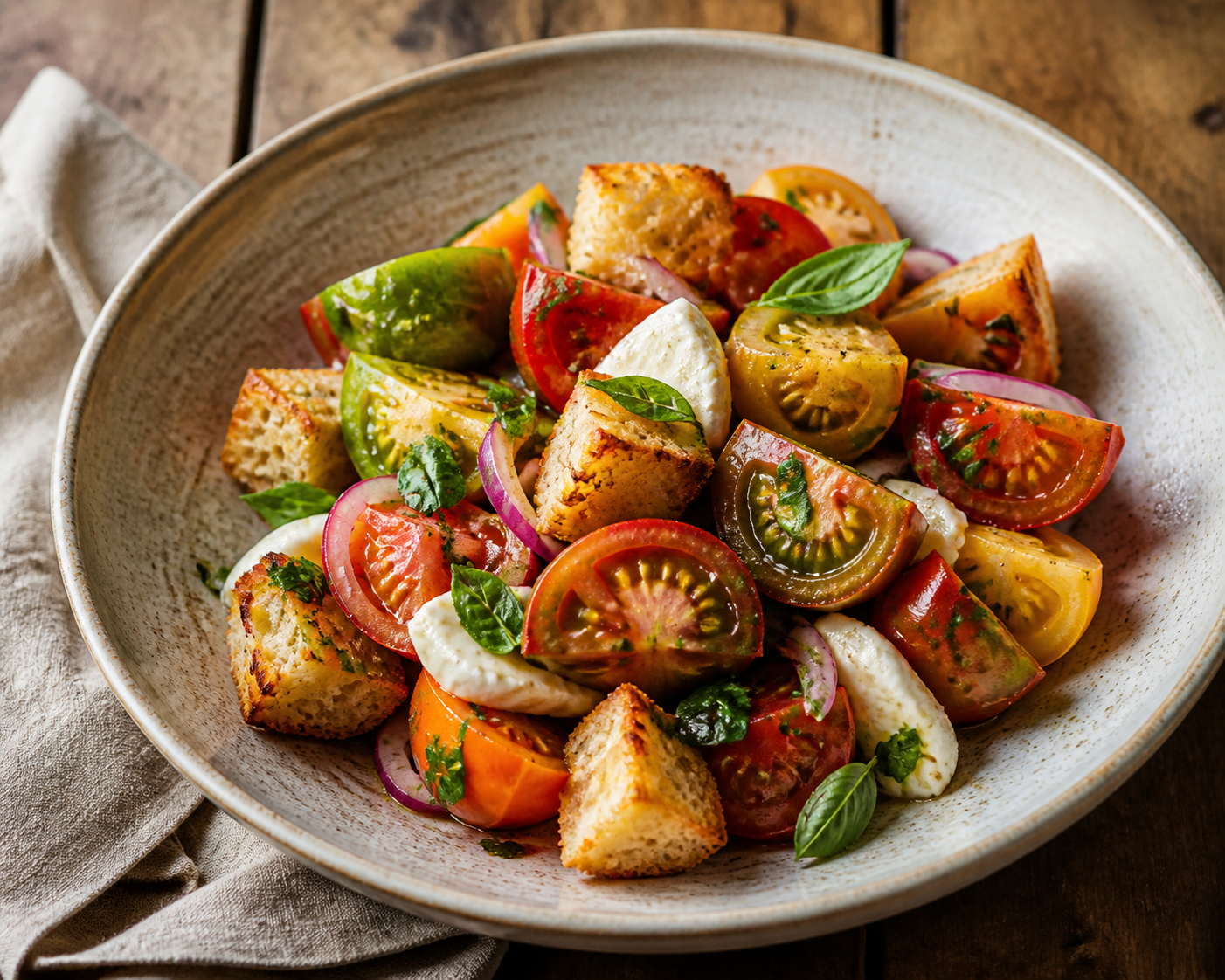
A wide, shallow bowl — the salad should spread, not stack, so the toasted chunks sit on top rather than sinking. Basil's green across, pepper from height, the oil bottle at the table for the last bite's anointing. It splits a roast chicken or a grilled steak's plate with full authority.
Troubleshooting
| Symptom | Cause | Fix |
|---|---|---|
| Salad soupy at the bottom | Unsqueezed bread or wet onion | The fist-squeeze law; pat the onion dry |
| Bread mushy throughout | Fresh bread, no toast reserve | Day-old bread; the two-thirds split |
| Tastes flat despite tomatoes | Under-salted draw or timid vinegar | Salt draws more water; vinegar up 1 tbsp |
Storage, Make-Ahead & Variations
- The dressed salad peaks at 30–60 minutes and holds honestly for 2 hours with the toast reserve; overnight it becomes a soft, tomato-forward dish that some Tuscans legitimately prefer — the file acknowledges the tradition and declines to rank it. - Variations: the roast-tomato winter build; the anchovy-and-bread dissolution for the coastal version; peaches standing in for half the tomatoes in the file's favorite August heresy; the grilled-bread panzanella, all chunks toasted over coals and soaked in dressing only — the steakhouse's answer to this farm table.