Roasted Beet and Citrus Salad
| Active time | 25 minutes |
| Hands-off time | 1 hour (beets) |
| Difficulty | Easy |
| Key techniques | whole-beet roast, the suprème cut, sweet-on-sweet balance |
| Make-ahead | beets 4 days; dressed salad, 15 minutes |
Roasted Beet and Citrus Salad
Prep: 25 minutes · Cook: 1 hour · Total: About 1 hour 25 minutes · 4 as a main, 6 as a side
Ingredients
The beets
- 700 g (about 4 medium) red and/or golden beets, scrubbed, unpeeled, greens removed to 2 cm
- 1 tbsp (12 g) olive oil, for the foil
- 1/2 tsp (2 g) salt
The citrus
- 2 oranges (about 300 g) — navel or blood oranges in season
- 1 grapefruit (about 250 g) — the tart balance wheel
The finish
- 100 g (about 3/4 cup) crumbled goat cheese or feta
- 40 g (1/3 cup) pistachios, toasted and chopped
- 15 g (1/2 cup) mint or basil leaves, torn
- One batch #3 citrus-honey vinaigrette (180 ml)
- 100 g (about 3 cups) arugula or mixed greens, optional base
- Black pepper, flaky salt
Instructions
- Roast the beets whole, 60 minutes at 200 °C. Wrap each scrubbed, unpeeled beet in foil with a drop of oil and a pinch of salt, set on a pan, and roast until a knife's tip slides through the largest beet's center with no resistance. Cool 15 minutes in the foil, then push the skins off with your thumbs — they slip like jackets. Checkpoint — the knife meets butter-soft resistance at the center, and the skin releases in one push, not a peel. Under-roasted beets squeak against the knife — back in the oven for 15 minutes more.
- Cut the citrus into suprèmes. Slice the top and bottom off each fruit to stand it flat, then cut the peel and pith away in curved strokes. Then, holding the naked fruit over a bowl, cut each segment free with a slice against each side of the white membrane — the segments lift out glassy and clean, and the membrane frames stay behind. Checkpoint — the segments are glossy, pith-free, and intact; the bowl has gathered 45–60 ml of juice. Squeeze the membrane frames over the bowl when done — that squeeze is the vinaigrette's dividend.
- Cut the beets and dress them first. Halve or quarter the beets, then cut into wedges; toss the wedges in the bowl with about half the vinaigrette and let them sit 10 minutes. Beets dressed ahead of the delicate elements absorb the vinaigrette into their cut faces and keep the greens from staining. Checkpoint — the wedges are glossy and the vinaigrette at the bowl's bottom has turned garnet (or stays gold, with golden beets) — flavor either way, and the case for golden beets is the clean board.
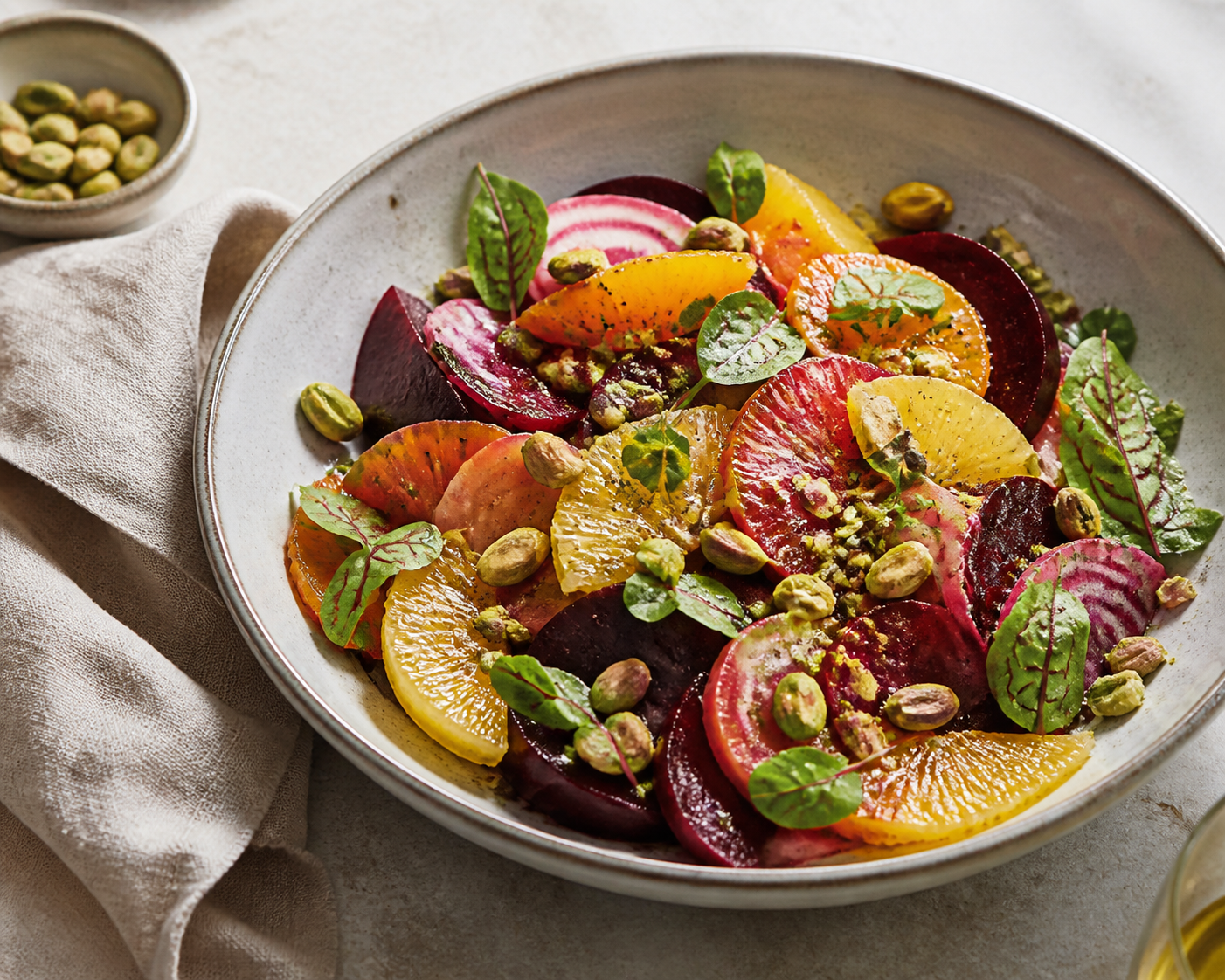
- Build the salad and balance the sweet. On greens if using, arrange the beet wedges and citrus suprèmes in alternating bands — the red and orange against each other is the dish's whole look. Scatter the cheese, pistachios, and herbs, pour the remaining vinaigrette over, and finish with flaky salt and pepper. Checkpoint — eating test: the beet's earthy candy against the citrus's bright acid — the two sweetnesses arguing — with the cheese's tang, the pistachio's snap, and the mint lifting the finish. If it runs too sweet (winter citrus varies), a squeeze of the reserved juice over the top rebalances the whole plate; that bowl of segments' juice exists for exactly this.
Doneness & Quality Checkpoints
- Beets knife-soft at the center, skins slipped not peeled
- Suprèmes pith-free and glassy, the juice caught
- Beets dressed 10 minutes ahead of the delicate elements
- Sweet-on-sweet balance checked — cheese, acid, and fat all present
- Flaky salt at the finish — sweet salads demand it
Finish & Plate
Wide, white plates show the red-orange bands best; dark bowls swallow the color. Greens under, beets and citrus in bands, the cheese in crumbles (not a crumb blanket — let the bands show), pistachios and mint last, pepper from height. It takes a roast chicken's plate beside it or stands alone with good bread.
Troubleshooting
| Symptom | Cause | Fix |
|---|---|---|
| Hands and board stained | Beets peeled before roasting | Roast whole in foil; slip the skins after |
| Salad tastes flat, sweet-sweet | Sweetnesses without acid | Reserved citrus juice over the top; salt up |
| Beets chewy | Under-roasted | The knife-soft test; +15-minute increments |
Storage, Make-Ahead & Variations
- Roasted beets keep 4 days refrigerated in their foil or a sealed container; the fully dressed salad holds 15 minutes before the greens stain and the cheese weathers. The vinaigrette keeps 4 days in its jar. - Variations: the blood-orange winter register; burrata replacing goat cheese for the creamy school; watercress for arugula's bite; a soft egg on the lunch build; golden-only for the unstained table.