Tabbouleh
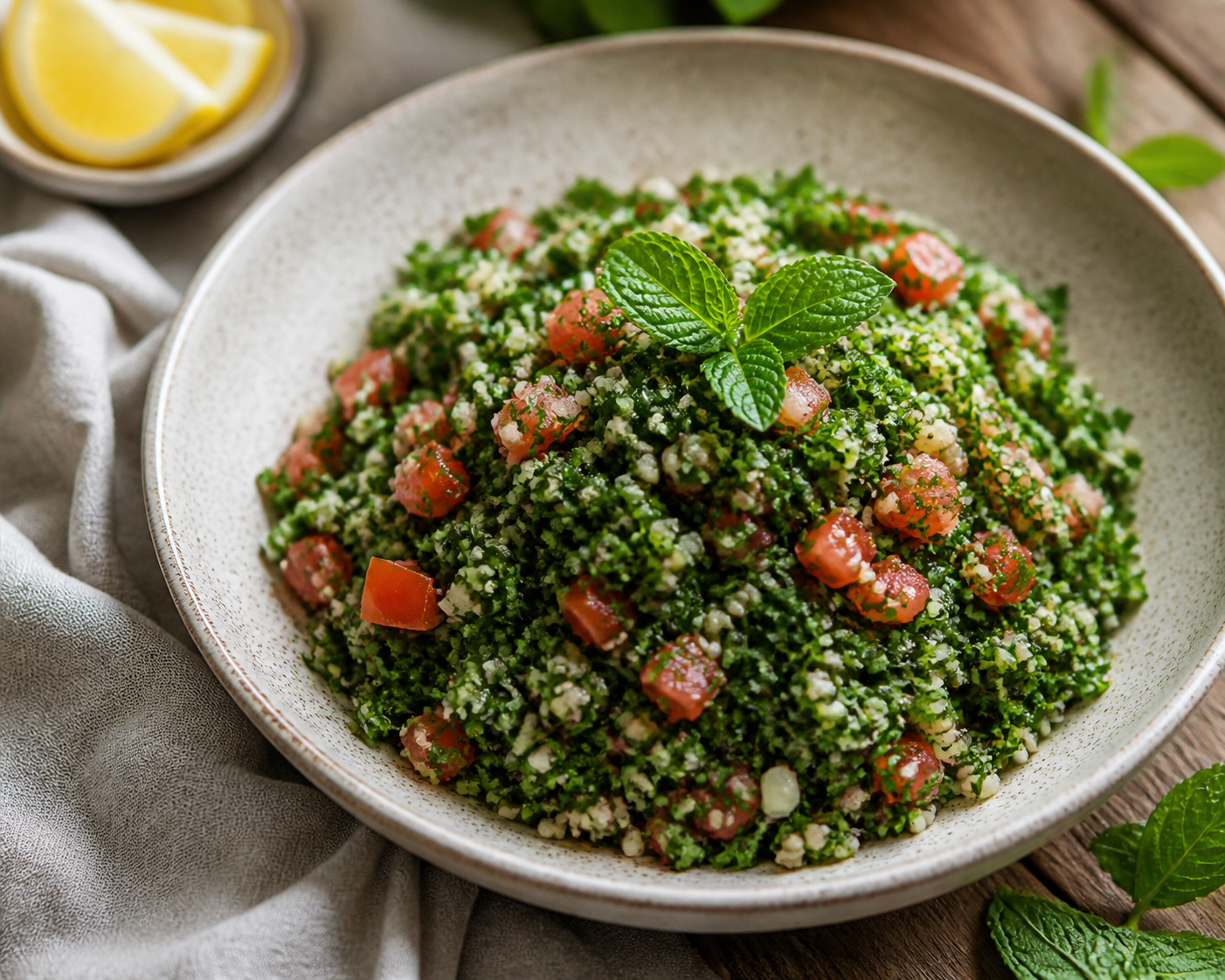
| Active time | 30 minutes |
| Hands-off time | 20 minutes (bulgur soak, salad rest) |
| Difficulty | Easy — knife patience is the craft |
| Key techniques | the parsley-first ratio, the tomato squeeze, fine-bulgur soak |
| Make-ahead | 1 day; best at 1–4 hours |
Tabbouleh
Prep: 30 minutes · Cook: No cook · Total: 30 minutes (plus 20 minutes' rest) · 6 as a side, 4 as a meze spread
Ingredients
The parsley and mint
- 250 g (about 4 large bunches) flat-leaf parsley — yes, four bunches; wash and dry them thoroughly the hour before
- 20 g (about 1 bunch) fresh mint leaves
The bulgur
- 80 g (about 1/2 cup) fine bulgur (#1 grind)
- 120 ml (1/2 cup) boiling water or fresh tomato juice
The vegetables
- 400 g (about 3 large) ripe tomatoes
- 1 small onion or 3 scallions (about 80 g), minced fine — scallions run gentler
The dressing
- 90 ml (6 tbsp) extra-virgin olive oil (about 82 g)
- 75 ml (5 tbsp) fresh lemon juice — more than you expect; tabbouleh runs tart
- 3/4 tsp (4 g) salt, plus more to taste
- Black pepper, optional — traditional tables run pepperless
To serve
- Cos or romaine leaves, the scoops — or warmed flatbread
- Extra lemon wedges
Instructions
- Squeeze the tomatoes. Halve and grate them on a box grater's large holes down to the skins (discard the skins), or dice fine and crush half of the dice with your fingers. Salt the pulp lightly and let it drain in a strainer 10 minutes over a bowl — you want the tomato's flesh, and its juice goes to the bulgur or the dressing. Checkpoint — about 80 ml of tomato juice in the bowl, and pulp that holds together on a spoon. Watery tabbouleh is unsqueezed tomato, full stop.
- Chop the parsley properly — the two-stage chop. Gather the washed parsley (stems removed below the leaf line — the top stems are fine and traditional) and chop coarsely, then gather and chop again, finer, until the largest piece is under 5 mm but the pile has not gone wet or dark. Chop the mint with the final pass. A sharp knife is the whole law here — a dull blade crushes and bruises, and bruised parsley is black-edged by the hour's end. Checkpoint — the pile is fine and fluffy, still vivid green, lifting on the knife like confetti — not compacted, not weeping. That fluffiness is the texture the salad lives on.
- Combine and dress. In your widest bowl, toss the chopped parsley and mint with the soaked bulgur (fluffed with a fork, every grain separate), the tomato pulp, the scallion, the lemon juice, oil, and salt. Toss with your hands for a full minute — the hands feel whether the bulgur has broken up the pile evenly. Checkpoint — taste: green and vivid first, then lemon's sharp brightness, then oil's roundness — and the bulgur should be texture, not flavor, a soft grain here and there. If the first taste is bulgur, the ratio slipped; add another handful of chopped parsley and re-toss.
- Rest 20 minutes, adjust, serve in scoops. The rest lets the bulgur and parsley exchange lemon and oil, and the tabbouleh's colors intensify. Taste again — almost always it wants more lemon — and serve in a bowl with the lettuce leaves arrayed around it: tabbouleh is scooped, not forked, in the Lebanese manner. Checkpoint — eating test: a scoop in a lettuce leaf — herbaceous, tart, juicy with tomato and oil, the bulgur a soft grain in the green. It should taste like a garden eaten by the handful, which is what it is. The Lebanese host's compliment is "your tabbouleh is green" — and now you know the file's whole law.
Doneness & Quality Checkpoints
- Parsley bone-dry before the chop, two-stage, under 5 mm, still fluffy
- Tomato pulp squeezed; its juice diverted, not added
- Fine bulgur soaked 20 minutes to separate grains
- Green-first taste, lemon close behind, bulgur as texture only
- Served with lettuce scoops — the traditional utensil
Finish & Plate
A wide, shallow bowl — depth bruises the pile. Lettuce leaves standing around the rim, lemon wedges beside, the tabbouleh mounded loosely, never packed. It heads a meze table with hummus and olives, and it makes the best next-day lunch scooped into a pita with feta.
Troubleshooting
| Symptom | Cause | Fix |
|---|---|---|
| Tabbouleh watery | Unsqueezed tomato or wet parsley | The strainer-and-salt step; dry herbs |
| Parsley black-edged | Dull knife or over-chopped | Sharpen, chop in two stages, stop at 5 mm |
| Tastes like bulgur salad | The inverted ratio | The four-bunches law; parsley is the salad |
Storage, Make-Ahead & Variations
- Keeps 1 day refrigerated (4 °C), best in the first 4 hours; re-toss and re-lemon at serving. The lemon fades overnight even when the color holds. - Variations: cucumber diced in (common, honest); the winter build with quartered cherry tomatoes; a spoon of pomegranate seeds for the festive register; the grain swap — quinoa for a gluten-free tabbouleh that stays within the parsley-first law.